


 |
| Chief Justice John Roberts has an opportunity to wield new power on the Supreme Court, as the 'swing' justice in the wake of Anthony Kennedy's retirement. (Reuters) |
With Justice Anthony Kennedy retiring, the man President Trump once called an "absolute disaster" potentially is poised to inherit the mantle of "swing" justice – and solidify his power on the Supreme Court.
Whether Chief Justice John Roberts can, or wants to, fill that vacuum is the big question in judicial circles right now.
"If the president, as everyone expects, nominates a conservative to fill Justice Kennedy's seat, the spotlight will shift to the chief justice, who will be viewed, rightly or wrongly, as the swing justice," said Thomas Dupree, a former top Bush Justice Department official. "In many ways, I think this would be a role the chief justice would welcome. He's played this role before.”
While Roberts is chief justice, Kennedy has long held the power. He holds the reputation, deservedly or not, of the man in the middle, whose votes on a range of hot-button issues proved decisive over a 30-year high court career.
But the President George W. Bush-appointed Roberts has flashed his own independent streak over the years, including on ObamaCare, and could be the closest to a wild card of those left on the bench. Kennedy hated the title of "swing" justice, and Roberts too may come to rue the perception that his future votes on the court are up for grabs. Both men are conservatives, nominated by Republican presidents. Both see themselves as institutional stewards of the court, particularly as an insular body free of partisan politics.
But for all the Democratic warnings that Kennedy’s retirement ensures an unflinching conservative majority, conservatives have their own concerns. The president will have control over the person to fill Kennedy's seat, but not the mind of the chief justice.
Some right-leaning legal activists have long believed Roberts is not someone whose vote they can take for granted, despite the Republican-appointed 63-year-old chief justice having a mostly conservative record for 13 years.
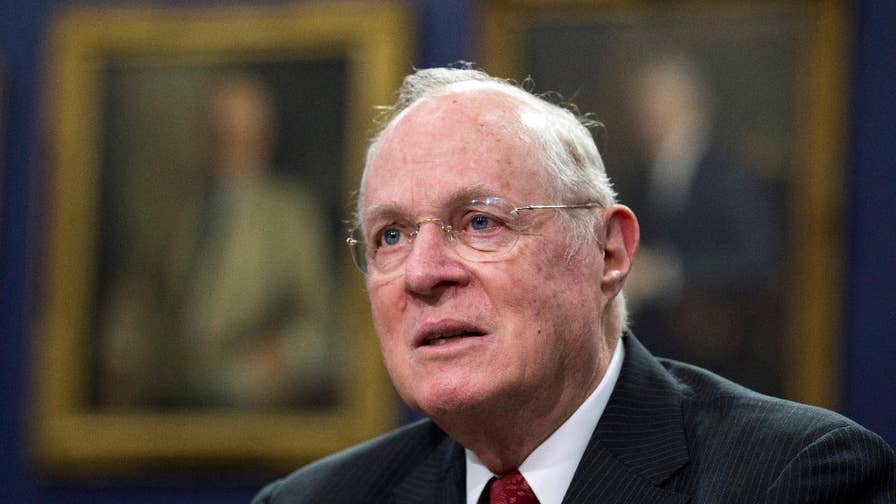
"It's the Roberts court now," said Michael Dorf, a Cornell law school professor who also runs the dorfonlaw.org legal blog. "The new justice will certainly be at least as conservative as CJ Roberts, so regardless of how this goes, the chief justice is now the center of the court."
Those close to Roberts told Fox News he has been especially sensitive to political attacks on the court as an institution and its role as a fair arbiter of the rule of law.
The "chief," as he is informally known around the court, has publicly stated his long-term efforts to forge consensus with his colleagues whenever possible, show respect for precedent and preserve the court's reputation.
In a 2014 speech, he said the "partisan rancor" among members of Congress "impedes their ability to carry out their functions. I don't want this to spill over and affect us.”
This was after Roberts' dramatic 2012 deciding vote upholding the key funding provision of the Affordable Care Act -- saving then-President Barack Obama's signature domestic achievement.
Conservatives called it a calculated act of betrayal, a narrative Trump echoed on the campaign trail.
"Justice Roberts really let us down," candidate Trump said at a December 2015 campaign rally. "What he did with ObamaCare was disgraceful, and I think he did that because he wanted to be popular inside the Beltway."
In other speeches, Trump has used words like "disappointment" and "nightmare." He had cited the late Justice Antonin Scalia and Justice Clarence Thomas as his favorites.
Yet as president, Trump heaped praise on moderate-conservative Kennedy following his retirement notice, meeting privately with the 81-year-old justice at the White House Wednesday just after the news was revealed.

![Cristiano Ronaldo beats Messi, Neymar to football rich list [Full list]](https://lh3.googleusercontent.com/blogger_img_proxy/AEn0k_v-2rL3NW1OiIYBMQ0GlvZNqYB9Pe2Zdr1oDwqlYtXjXYKQ2jiCv1nI_eaxgLKPfgyhdUOf52J_WrllPr2Ittl8ECJdwubAkuYd7IKyDb5ARbM31PHItOCcAi1dMUB_Qq1EwcrqlxSQBOcS5aS_pbDL=w72-h72-p-k-no-nu)


0 Comments